Streamline Your KDP Publishing with Editable Canva Templates
For anyone involved in the print-on-demand space, the friction between a finished manuscript and a professional-looking book can be the most frustrating part of the process. You have the content, the target audience, and the niche, but the design software often stands as a barrier. This is where the value of a tailored digital asset becomes immediately apparent. By utilizing pre-structured layouts, you bypass the technical hurdles of setting up bleed, margins, and spine width, allowing you to focus entirely on the visual branding of your work. The goal here is to transform the production phase from a technical chore into a creative exercise.
The Anatomy of a Professional Print-Ready Layout
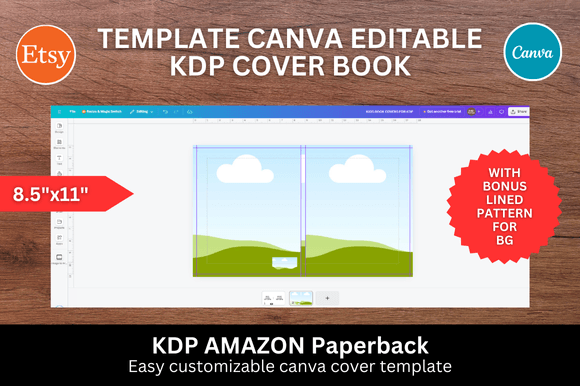
When we talk about KDP BOOK COVER Templates Canva Editable, we are discussing more than just a static image file. We are looking at a complete design ecosystem packaged for accessibility. The primary advantage of this specific format is the integration with Canva, a tool many creators already use for social media graphics and basic brand collateral. Instead of learning complex software like Adobe InDesign, you can operate within a familiar interface. The templates arrive in a standardized dimension—specifically the widely favored 8.5" x 11" size—which is an industry standard for workbooks, planners, and non-fiction guides. This sizing ensures that when the file hits the Amazon KDP system, it aligns perfectly with their printing specifications without requiring manual adjustments to the trim lines.
The visual personality of these templates generally leans toward clean, modern typography. They often feature a balanced mix of serif and sans-serif fonts to create a natural visual hierarchy. For instance, a template might use a bold display font for the title to grab attention in a thumbnail size, while utilizing a highly legible sans-serif for the author name. This approach ensures that the design remains functional. A common design observation in these assets is the strategic use of negative space; by leaving room around the central imagery, the cover feels less cluttered and more premium. This is crucial for brand identity, as a cluttered cover often signals low value to a potential buyer browsing the marketplace.
Visual Strategy and Brand Consistency
Choosing the right cover is not just about aesthetics; it is a strategic business decision. The cover acts as the primary billboard for your content. When you download a KDP BOOK COVER Templates Canva Editable pack, you are essentially acquiring a set of design assets that are pre-calibrated for success in editorial design. The appeal lies in the adaptability. Whether you are publishing a fitness journal, a business planner, or a guided notebook, the structure allows you to swap out background images, change color palettes, and insert your own logo design elements seamlessly.
Consider the psychology of color and font choice. If you are a content creator in the wellness niche, you might gravitate towards templates that utilize softer, muted tones and perhaps a gentle script font for accents. Conversely, if you are publishing a financial guide, you would want a layout that uses sharp lines, high-contrast colors, and a sturdy geometric sans-serif font. The templates provide the skeleton, but the personality comes from how you customize it. This ensures that your book fits seamlessly into your broader brand identity, matching your website, your social media graphics, and your overall marketing message.
Practical Application and Workflow Efficiency
The workflow for using these assets is designed to eliminate bottlenecks. Because the package includes a PDF with direct Canva links, the transition from purchase to editing is nearly instantaneous. You click the link, the template opens in your browser, and you can begin modifying the text immediately. This is particularly helpful for entrepreneurs and small business owners who may not have the budget to hire a professional designer for every single product they release. It democratizes the creation of premium looking goods.
However, there are practical considerations to keep in mind to ensure the final product looks professional:
- Font Pairing: While the templates come with suggested fonts, don't be afraid to experiment. If the template uses a handwritten font, ensure that the body text or subtitle uses a clean, readable typeface to maintain balance. Avoid pairing two highly decorative fonts together, as this creates visual chaos.
- Image Resolution: When replacing placeholder images, always use high-resolution files. Even the best template design will look amateurish if the background image is pixelated or blurry when printed at 8.5" x 11".
- Color Contrast: Ensure that your text stands out against the background. If you place white text over a light gray image, it becomes unreadable. Use overlay shapes or shadows to create separation if necessary.
Elevating the Reader Experience
Ultimately, the success of a book relies on the reader's experience, which begins the moment they see the cover. A well-designed cover sets expectations. It tells the reader that the content inside has been curated with care. By using KDP BOOK COVER Templates Canva Editable, you are leveraging professional modern typography and layout principles without needing years of design school. These templates are not just about making things look pretty; they are about creating a functional bridge between your ideas and your audience. They allow you to maintain a consistent output of products, which is essential for scaling a print on demand business.
For the hobbyist or crafter, these tools offer a way to turn a passion project into a tangible product. For the marketer, they offer a quick way to produce lead magnets or branded guides. The versatility of the 8.5" x 11" format cannot be overstated; it is large enough to be impactful but standard enough to fit on any shelf. By focusing on the quality of the typeface and the clarity of the layout, you ensure that your work stands out in a crowded digital marketplace. The ability to edit these files in real-time means you can A/B test different covers for the same content, refining your approach based on what your specific audience responds to best.