Design Your Ideal Journal: A Deep Dive into Canva Templates
More Than Just Lines on a Page
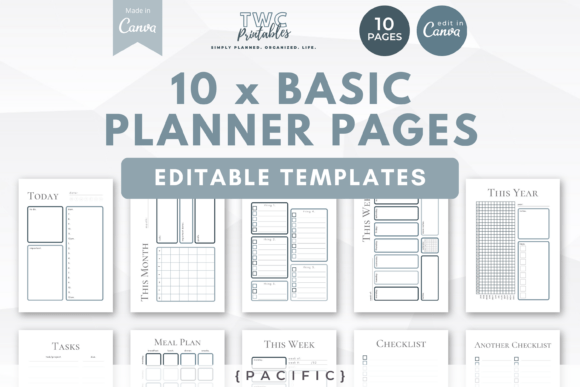
There is a specific kind of clarity that comes from putting pen to paper, but in the digital age, the tools we use to organize our thoughts have evolved. If you have ever browsed the market for a journal or planner, you know the frustration of finding a layout that is almost right, but the font is too rigid, the colors are jarring, or the dimensions simply don't fit your lifestyle. This is where the true power of a customizable digital asset comes into play. We are moving past the era of static PDFs and into a space where your planning tools should be as fluid and dynamic as your ideas. A Journaling Planner Canva Template is not just a file; it is a starting point for a conversation between the designer and the user, facilitated by the accessibility of modern web-based design tools.
The visual personality of these templates often leans toward a blend of minimalism and warmth. Because the goal is to create a space for reflection, the design aesthetics usually avoid clutter. You will often find clean lines, ample white space, and typography that feels personal yet legible. The appeal lies in the balance—it looks professional enough for a business owner mapping out their quarter, yet intimate enough for someone keeping a gratitude diary. By providing a Customizable Journaling Diary Canva KDP Layout, creators are handing over the keys to a vehicle that the user can repaint, reupholster, and tune to their exact specifications. It acknowledges that no two creative processes look the same, and therefore, no two journals should look identical either.
The Anatomy of True Adaptability
When we talk about a template being "completely adaptable," it goes beyond simply changing the color of the header. A high-quality Canva template allows for a fundamental shift in the document's DNA. Take the dimensions, for example. The standard 8.5 x 11 inches is a classic, offering plenty of real estate for detailed planning, sketching, or extensive writing. However, the digital environment allows you to experiment with aspect ratios that might be difficult to print but perfect for tablet use. The ability to modify dimensions means you can create a companion piece for your iPad or a condensed version for a traveler's notebook.
Furthermore, the inclusion of a tailorable Canva URL changes the workflow entirely. Instead of downloading a massive file that clogs your hard drive, you receive a link that opens directly in your browser. This is crucial for entrepreneurs and marketers who need to access their planning tools from multiple devices—perhaps tweaking a content calendar on their laptop at the office and reviewing it on their phone during a commute. The ability to modify fonts and hues is where the branding magic happens. For a small business owner, this means you can inject your specific brand identity directly into your planning process, ensuring that your internal tools match the visual language of your public-facing content.
Practical Applications Across Industries
The versatility of a well-designed journaling template makes it a valuable asset for a wide range of professionals and hobbyists. Here is how different groups can leverage these layouts:
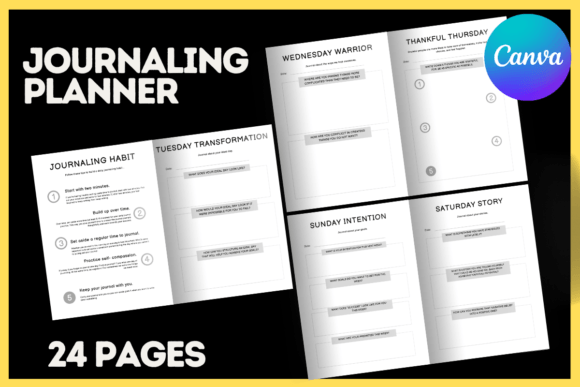
- For Entrepreneurs and Marketers: Use the 24-page layout to map out quarterly goals, social media campaigns, or client onboarding checklists. By customizing the typography to match your brand identity, you turn a generic planner into a proprietary business tool.
- For Content Creators and Bloggers: A journal isn't just for private thoughts. It can be a content calendar, an editorial storyboard, or a mood board. The ability to incorporate images allows you to drag and drop inspiration directly onto the page, creating a visual roadmap for your next video or article.
- For KDP Publishers: If you are in the business of creating low-content books for Amazon KDP, these templates are the foundation of your product. The Customizable Journaling Diary Canva KDP Layout provides the interior structure you need, while the editable features allow you to create niche-specific journals (e.g., fitness trackers, gardening logs) by simply swapping out icons and text.
- For Designers and Crafters: Treat the journal as a playground. Experiment with different font pairings—perhaps a serif font for headers and a clean sans serif font for body text—to see how hierarchy affects readability before applying those choices to a client's website or packaging design.
Design Mechanics: Readability and Hierarchy
A journal is meant to be used, which means readability is paramount. A beautifully designed page is useless if the lines are too close together or the font is too decorative to read quickly. When you open your editable link, pay close attention to the visual hierarchy established by the template designer. Good editorial design guides the eye naturally from the date at the top, through the prompt or task list, and down to the notes section.
This is where understanding modern typography becomes a practical skill rather than an academic theory. If you find the default script font too hard to read for daily planning, swap it out for a handwritten font that has better legibility. If the display font used for headers feels too loud for your taste, consider a more subdued premium font to maintain professionalism. The goal is to create a typeface hierarchy that serves the function of the planner. For instance, using bold text for high-priority tasks and standard weight for sub-tasks creates an immediate visual distinction that helps you organize your day at a glance.
Maximizing Your Template Asset
To get the most out of your purchase, it is important to approach the template with a strategy. Don't just start clicking randomly. First, define the purpose of the journal. Is it a personal diary, a project manager, or a product for sale? Once the goal is set, evaluate the design assets included. Are there enough pages for a month-long project, or is this a yearly overview?
A critical technical step, often overlooked, is file management. Because Canva links are shared, the original file belongs to the creator. To ensure you don't lose your work or overwrite the master file, you must follow the instruction to "Make a copy in your own account." This creates a private workspace where you can experiment freely. Once you have your copy, test the layout by filling in a few pages with real content. This helps you spot any readability issues or spacing problems that aren't apparent when the page is blank. By treating the Journaling Planner Canva Template as a dynamic piece of your creative toolkit rather than a static file, you unlock a world of organizational potential that is perfectly tailored to your needs.