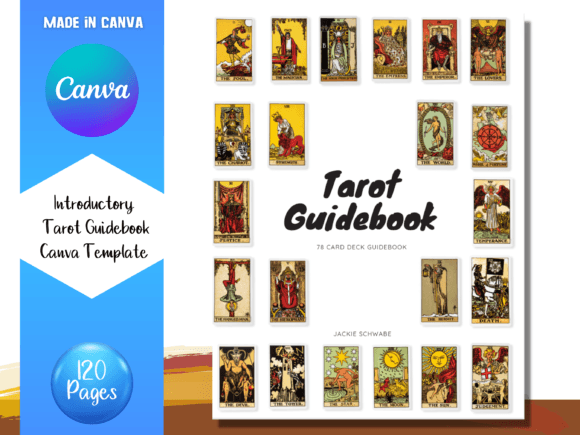
Build a Complete Tarot Practice with a 120-Page Guidebook
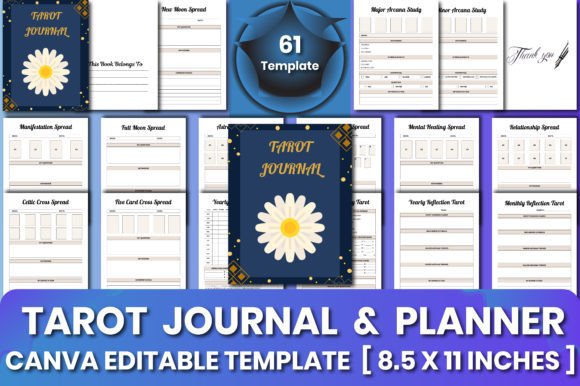
For the designer, the spiritual entrepreneur, or the creative hobbyist looking to professionalize their practice, the gap between a stack of tarot cards and a cohesive reading experience is often documentation. You have the intuition, and you have the cards, but packaging that knowledge into a tangible asset requires serious time and design skill. This is where the 120-Page Tarot Guidebook Canva Templates come into play, offering a bridge between raw spiritual knowledge and polished editorial design. It is not just a collection of pages; it is a fully structured system designed to take a user from the history of the cards to complex spreads with visual consistency.
The Anatomy of a Professional Tarot Asset
When you download a resource like the 120-Page Tarot Guidebook Canva Templates, you are acquiring more than just a file; you are investing in a design framework. From a professional standpoint, the value lies in the structure. A 120-page layout is a significant undertaking to build from scratch. It requires a deep understanding of visual hierarchy and editorial design. The template solves the problem of "blank page syndrome" by providing a pre-organized logical flow. It begins with the foundational elements—history and deck structure—before moving into practical application. This structure mirrors how professional instructional content is created, ensuring the reader is guided logically rather than overwhelmed by information.
The aesthetic appeal of these templates usually leans toward a modern, clean typography style. In the world of spiritual products, there is a temptation to over-design with esoteric symbols. However, a high-quality template prioritizes readability. You will likely find a balance of serif fonts for body text to evoke tradition and authority, paired with sans serif fonts or subtle script fonts for headings to add a touch of mystique without sacrificing legibility. This combination supports a brand identity that feels both grounded and magical. The layout allows for ample white space, which is crucial in print design to prevent the page from feeling cluttered, especially when dealing with card imagery and descriptive text side-by-side.
Customization as a Brand Strategy
The true power of the 120-Page Tarot Guidebook Canva Templates lies in the "100% customizable" promise. For the content creator or small business owner, this is the difference between a generic PDF and a proprietary digital asset. Canva’s interface allows you to swap out imagery and text with relative ease, but the strategic application of this feature is where the design expertise comes in.
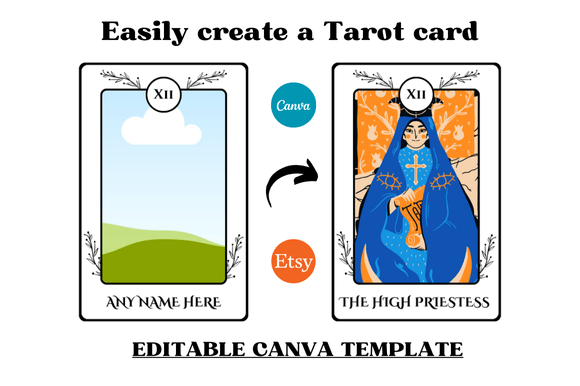
If you are a tarot reader selling digital courses or physical decks, your guidebook needs to match your existing brand identity. You can upload your specific brand color palette and apply it globally across the 120 pages. If your brand uses a specific modern typography style—perhaps a handwritten font for a personal touch or a premium font for a luxury feel—you can update the headers to match. This ensures that the guidebook feels like a natural extension of your business rather than a third-party add-on. The ability to swap card images is particularly vital for deck creators. If you have designed a custom deck, you can replace the standard Rider-Waite-Smith imagery with your own artwork, turning the guidebook into a companion book for your specific product.
Practical Applications Across Industries
The utility of a comprehensive tarot guide extends beyond personal spiritual development. Here is how different professionals can leverage this asset:
- Graphic Designers & Packaging: If you are designing a box set for a client, the internal structure of this guidebook serves as a perfect baseline for packaging design inserts. You can adapt the spreads and descriptions to fit the dimensions of a booklet that slides into a card box.
- Bloggers & SEO Strategy: A 120-page guide contains a massive amount of content. Bloggers can repurpose the "Card Descriptions" and "Sample Questions" sections into individual blog posts. This creates a content calendar that is already structured for SEO, targeting long-tail keywords related to specific card meanings.
- Marketers & Lead Magnets: While 120 pages might be too large for a simple email opt-in, you can extract specific chapters—like the "10+ Unique Spreads"—and design them as standalone PDFs. This is a classic marketing strategy: use a portion of the asset to capture leads, then upsell the full guidebook.
- Print-on-Demand: For entrepreneurs using services like Lulu or Blurb, this template is formatted to be uploaded directly for physical printing. The consistency of the margins and bleeds (provided you check them in Canva) ensures a professional finish.
Typography and Readability in Instructional Design
When dealing with a dense document like a guidebook, readability is the metric that matters most. The 120-Page Tarot Guidebook Canva Templates generally utilize a typographic hierarchy that aids in scanning. Large H1 and H2 headers break the content into digestible chunks, which is essential for users referencing the guide during a reading. They need to find the "Two of Cups" meaning quickly without reading through paragraphs of unrelated text.
Look closely at the font pairing used in the template. A common and effective pairing in this niche is a high-contrast serif for titles (evoking the weight of ancient wisdom) combined with a humanist sans-serif for the body (ensuring clarity on both screen and paper). When you edit the template, maintain this hierarchy. Do not use a decorative font for body text, as it will tire the reader's eyes. Instead, use decorative or script fonts sparingly for pull quotes or chapter titles to add personality without hindering the reading flow. This approach respects the user experience and maintains the professional standard of the design assets.
Structuring the Content: Beyond the Major Arcana
A common pitfall in amateur tarot guides is an overemphasis on the Major Arcana while glossing over the Minor. The strength of a 120-page template is that it has the real estate to cover all 78 cards comprehensively. When customizing the text, ensure that your descriptions for the Minor Arcana cards are just as detailed as the "Big" cards.
The inclusion of 10+ unique spreads is a key selling point. From a design perspective, these pages often require a different layout than the text-heavy card descriptions. They usually feature diagrams or visual placeholders for card positions. When editing these pages, ensure the visual flow guides the eye from the diagram to the explanation. This is where visual hierarchy plays a critical role. Use bolding for the position names (e.g., "Past," "Present," "Future") so a reader can quickly scan the page while laying out their cards.
Finalizing Your Guidebook for Publication
Before exporting your final file for digital distribution or print, run through a quality control checklist. Ensure that your chosen typeface is legible at small sizes, especially if you plan to print a pocket-sized version of the guide. Check that the color contrast between text and background meets accessibility standards. Finally, verify that the "Sample Questions" section aligns with your specific audience. Whether you are targeting general self-help or niche business advice, tailoring these questions adds immense value to the end product. By treating the 120-Page Tarot Guidebook Canva Templates as a flexible foundation rather than a rigid final product, you create a resource that enhances your authority and serves your audience effectively.